Insights
B2B Video Production Pricing: What a $40K Flagship Film Includes
B2B video production pricing, decoded. A $40K Flagship Launch Film would cost $85K to $250K with a traditional crew or LED volume. Here is the line-by-line.
By Gavin Woodward, Founder. Published June 19, 2026.
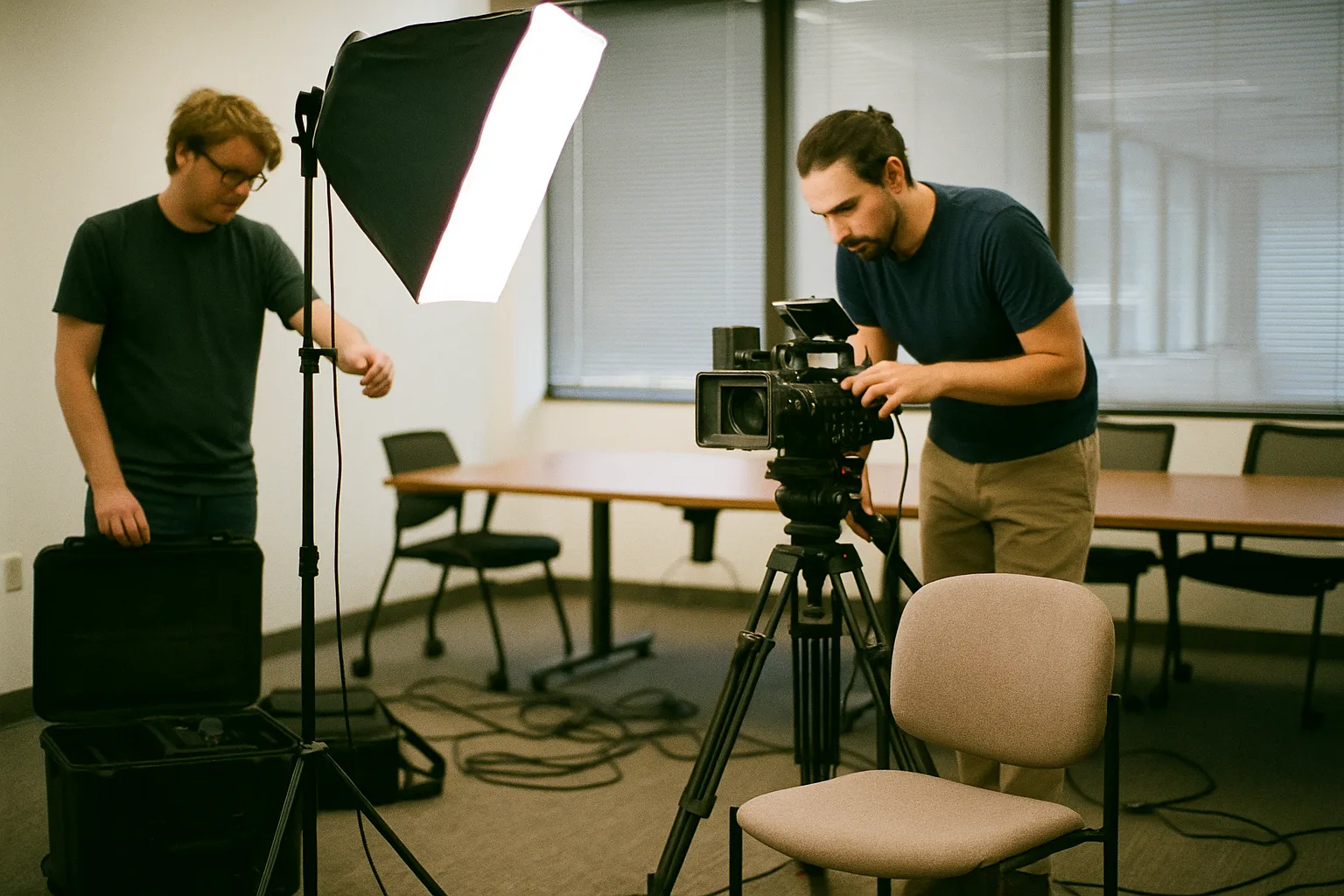
B2B video production pricing has an honest version most vendors bury: a flagship B2B launch film is a flat $40K on an AI-hybrid pipeline. The same film runs $85K to $150K with a traditional crew, or $125K to $250K on an LED volume. You pay less because the heavy lifting moved into post, not onto the invoice. Here’s exactly what that $40K buys.
An AI-hybrid pipeline is a production model that captures real live-action for the human moments, then composites AI-built environments and generated shots in post instead of staging them on location.
01 Per minute
Why is per-minute pricing the wrong way to budget a B2B video?
Per-minute pricing is wrong because the same minute can cost anywhere from $15K to over $250K. Industry guides put animated B2B video at roughly $1,000 to $7,000 per minute (Advids, 2026). That spread is so wide the number is useless for budgeting. The production model, not the runtime, decides the price.
A per-minute quote feels precise. It isn’t. It bundles wildly different work under one tidy figure, and that figure hides the only thing that matters: which kind of film you’re actually buying. A single two-minute video can be a $15K Executive Sizzle or a $250K LED-volume build. Per minute, those look identical. They’re not.
It gets worse. Per-minute billing punishes the edit you actually want. The ruthless, tested 90-second cut that outperforms a loose three-minute version now costs you less, so the incentive quietly tilts toward padding the runtime instead of sharpening the story. You end up paying for length nobody needed.
And it ignores where the money really goes. Concept, direction, talent, and post are the bulk of any serious B2B film, and almost none of that scales with duration. In our work for Series B+ tech brands, the tightest cut is almost always the most expensive one to make and the cheapest one to watch. You buy a Flagship Launch Film, not 100 seconds of footage, and a shorter, sharper cut costs you nothing extra.
We price by the asset, not the minute.
02 The tiers
What are the three B2B video pricing tiers?
Emissary publishes three flat-fee tiers with a public floor, no hourly billing, and no change orders. An Executive Sizzle is $15K to $25K, a Flagship Launch Film is a flat $40K, and a Conference Content System starts at $60K. The Flagship is the most-chosen tier, because a launch or funding moment is what most Series B+ brands are filming.
Each tier is an asset, not a runtime. You’re buying a specific outcome, scoped before the call. Here’s what each one is built for.
| Tier | Price | Format | Best for |
|---|---|---|---|
| Executive Sizzle | $15K to $25K | 60-second cinematic asset | One product or one moment that has to look like the category leader. |
| Flagship Launch Film (most chosen) | $40K | 90 to 120 second narrative | The launch or funding announcement the whole company is built around. |
| Conference Content System | $60K and up | Multi-asset program | A keynote opener, product films, and a sales-enablement library, scoped as one system. |
The Executive Sizzle is a 60-second cinematic asset at 3D-grade visual quality, usually delivered in a few days. The Flagship is a 90 to 120 second narrative blending live-action capture with 8K AI-composited environments, usually a week or two. The Conference Content System scopes a keynote opener, product films, an architectural explainer, and a sales-enablement library as one program.
For event work, the bands we scope widen. Fee-only cinematic content for a conference runs $50K to $250K-plus, and full-program totals run $50K to $300K once AV and production-partner costs are folded in. By our planning math, a physical sales kickoff for 200 reps burns $500K to $800K. Reallocate just 15% of that, and you own a year-round sales-enablement engine instead of a one-night event. The full breakdown, add-ons, and event bands live on the pricing page.
03 The breakdown
What does a $40K Flagship Launch Film actually include?
A $40K Flagship Launch Film is a 90 to 120 second narrative that blends live-action capture with 8K AI-composited environments. The fee covers remote-first capture, full internal post on the Emissary Stack, full IP assignment, zero data retention, C2PA provenance, and a signed named-talent agreement for every face. Nothing on this list is an upsell.
This is the line-by-line, drawn from Emissary’s published pricing and process. No part of it is hidden behind a contact form.
What you get on screen
The deliverable is a flagship narrative, 90 to 120 seconds, that carries the authority of a six-figure film. Live-action capture handles the human moments: the founder, the executive, the real face on camera. AI compositing builds the moments a crew can’t practically stage, rendered as 8K virtual environments. Direction comes first and AI second, which is the order that keeps the result cinematic instead of generic. For the full mechanics, see the AI-hybrid pipeline.
How the capture works
Capture is remote-first. A pro kit ships to you: a Sony ZV-E1, a Rode Wireless Pro, and an Aputure MC Pro panel. Before you record, you get a 30-minute Riverside prep call coaching framing, lighting, and wardrobe. Then you record 10 to 15 minutes of raw locally in 4K, with an uncompressed Riverside backup running in parallel. No travel, no crew in your lobby, no hotel block.
What happens in post
All post runs internally on the Emissary Stack. That covers AI compositing, the 8K virtual environments, the edit, and sound design. Unlimited minor revisions are included in the first five days. Major revisions, the kind that change the brief, are a change order. The usual timeline is a week or two, not the four to eight weeks a crew or stage build demands.
What you own and how it clears legal
You get full IP assignment: the raw, the composite, and the final master all transfer to you. Data retention is zero. Every cut carries C2PA and Content Credentials, so the AI work ships with an audit trail. Every face on screen has a signed named-talent agreement. The pipeline tools are disclosed per project in the statement of work. These are defaults, not add-ons, and the workflow is built for enterprise legal review. For the compliance posture in full, see rights and compliance.
Three optional add-ons exist when a project calls for them:
| Add-on | Price | What it adds |
|---|---|---|
| Onsite Hybrid Add-On | +$8K to $15K | A lighting pro on site when the moment needs a crew in the room. |
| Remote Interview Kit | +$2K to $5K | A key light and lav, or a coached webcam, finished to broadcast grade. Restoration only, never synthetic. |
| Emissary Studio On Tap | By quote | A retainer of four launch-grade films a year plus supporting cutdowns. |
04 The gap
Why is an AI-hybrid film $40K when a crew shoot is $85K to $250K?
An AI-hybrid film is $40K because the cost moves into post instead of onto a location. A traditional crew shoot runs $85K to $150K-plus and an LED volume runs $125K to $250K-plus, mostly on logistics. One line item explains most of the gap.
Here’s the same flagship-grade film, priced three ways, with the logistics that make up the gap.
| Production model | Same flagship film | Timeline | What you pay for |
|---|---|---|---|
| AI-hybrid on the Emissary Stack (our model) | $40K | Days, not weeks | Craft, direction, and post. Remote-first capture. |
| Traditional crew shoot | $85K to $150K+ | 4 to 6 weeks | A 10 to 15 person crew, flights, hotels, and locations. |
| LED virtual production volume | $125K to $250K+ | 6 to 8 weeks | Stage rental, a real-time Unreal team, and a VP supervisor. |
The $85K to $250K comparison figures are Emissary’s stated positioning, drawn from real market logistics rather than a single audited per-film invoice. They hold up against independent data. Vidico prices complex commercials and brand films at $15K to $50K-plus per project and commercial work at $5K to $20K-plus per finished minute (2026). Vidico is itself a competitor that publishes pricing, which makes the corroboration more useful, not less: an independent vendor confirms a launch-grade film lands well into five figures.
Same authority on screen. The gap between $40K and $250K isn’t quality, it’s where the work happens: in post, or on a location with a fifteen-person crew and a hotel block. The AI-hybrid pipeline composites the impossible shots rather than staging them, so you pay for craft instead of travel. The named pipeline tools are disclosed per project in the statement of work: Sony ZV-E1, Rode Wireless Pro, and Aputure for capture; Higgsfield and Runway for compositing; Veo 3, Kling, and Sora-grade models for generation; HeyGen and ElevenLabs for consent-gated voice and lip-sync only; and C2PA provenance in every cut across every tier.
05 The drivers
What actually drives a B2B video budget?
Six levers move a B2B video budget, and runtime is conspicuously not one of them. The biggest is the production model, which can triple the invoice for the same on-screen result. After that, it’s the asset count per shoot, the executives on camera, the live-action footprint, the deadline, and the number of cutdowns. Budget around these, not the clock.
- Production model — AI-hybrid post, a traditional crew, or an LED volume. This single choice can triple the invoice for the same authority on screen.
- Asset count per shoot — one capture day can yield one film or ten. Multi-asset programs are cheaper per finished film than three separate one-off shoots.
- Executives on camera — every additional executive adds a scheduling round, direction time, and a signed named-talent agreement.
- Live-action footprint — onsite crew days, travel, and locations are what the AI-hybrid pipeline removes, accounting for most of the $40K-versus-$150K gap.
- The deadline — a funding date or conference keynote compresses the schedule, and schedule compression costs money.
- Cutdowns and versions — social, regional, and sales-enablement variants multiply from the master. The first cut is expensive; everything after it is comparatively cheap.
This matters before you ever ask a vendor for a number. The reason marketers keep filming is measurable: 82% say video delivers a good ROI and 83% say it has directly increased sales, per Wyzowl’s 2026 survey. The question is never whether to film. It’s how to scope the film so the budget tracks the work.
The production model
AI-hybrid post, a traditional crew, or an LED volume. This single choice can triple the invoice for the same authority on screen. It’s the first lever to pull and the one most pricing pages bury.
Assets per shoot
One capture day can yield one film or ten. A Conference Content System amortizes a single production across an entire library, which is why a multi-asset program is cheaper per finished film than three one-off shoots.
Executives and talent on camera
Scheduling, direction, and a signed named-talent agreement for every face. People are harder to coordinate than pixels, and every additional executive adds a calendar and a consent instrument.
Live-action footprint
Onsite crew days, travel, and locations are the line items that scale fastest. They’re also precisely what an AI-hybrid pipeline removes, which is where most of the $40K-versus-$150K gap comes from.
The deadline
A funding date or a conference keynote compresses the schedule, and a compressed schedule costs more. The clock that matters is the delivery deadline, not the runtime.
Cutdowns and versions
Social, regional, and sales-enablement variants multiply from the master. The first cut is the expensive one. Everything after it is comparatively cheap, which is another reason per-minute math misleads.
How should you budget a B2B launch film?
Budget a B2B launch film by the asset, not the minute. Pick the tier that matches the outcome: a $15K to $25K Executive Sizzle for a single moment, a flat $40K Flagship for the launch the company is built around, or a $60K-plus Conference Content System for a full program. Then scope the six cost drivers, and ignore the runtime entirely.
The honest version of B2B video production pricing is short. There’s no per-minute number worth trusting. The production model sets the cost, the asset type sets the fee, and a flat price means you can budget before the first call. A $40K Flagship buys a film that would cost $85K to $250K any other way, with full IP and C2PA provenance built in. See the full pricing breakdown and the related corporate video cost breakdown, or plan a project on the B2B enterprise video production page and get a written scope within one business day.
Gavin Woodward is the founder of Emissary Studio, with prior brand and commercial film work for Ariat, Nike, Behr Paint, Zig Zag, and FOX.
Frequently asked questions
How much does a B2B video cost per minute, and why is that the wrong question?
There's no reliable per-minute rate. The same single minute can be a $15K Executive Sizzle or a six-figure LED-volume build, so a per-minute number tells you almost nothing about what you're buying. We price by the asset instead. A Flagship Launch Film is a flat $40K whether the final cut runs 90 seconds or 120.
What does a $40K Flagship Launch Film actually include, line by line?
A 90 to 120 second narrative blending live-action capture with 8K AI-composited environments, a shipped pro capture kit with a coached prep call, full internal post on the Emissary Stack, full IP assignment of raw, composite, and master, zero data retention, C2PA provenance in every cut, and a signed named-talent agreement for every face. Unlimited minor revisions in the first five days are included.
Why is an AI-hybrid film $40K when a traditional crew is $85K to $150K and an LED volume is $125K to $250K?
Because the cost moves into post, not onto the invoice. A traditional crew shoot pays for a 10 to 15 person team, flights, and hotels. An LED volume rents a stage and a real-time Unreal team. The AI-hybrid pipeline composites the impossible shots instead of staging them, so you pay for craft and direction, not logistics.
Is an AI-hybrid film lower quality than a traditional shoot for the same money?
No. The gap between $40K and $250K is where the work happens, not the authority on screen. Live-action capture handles the human moments and AI compositing builds the environments that would otherwise need a location, a crew, or a stage. Direction comes first and AI second, which is what keeps the result cinematic rather than generic.
What is the cheapest a credible B2B launch film can be, and why is the floor $15K?
$15K is the lowest number at which cinematic-grade craft is still deliverable. Below it, the math forces corners that make a film look cheap, and a cheap film does more brand damage to a Series B company than no film at all. The floor is a quality guarantee, not a paywall.
What actually drives a B2B video budget up or down if it is not runtime?
Six things, and runtime isn't one of them. The production model, the number of finished assets from one shoot, how many executives are on camera, the live-action and travel footprint, the deadline, and how many cutdowns and versions you need. The production model alone can triple the invoice for the same on-screen result.
Do I own the footage and the final film, and how is the AI work handled for legal and security review?
Yes. Full IP assignment of the raw, the composite, and the final master transfers to you by default, with zero data retention. C2PA and Content Credentials are embedded in every cut so the AI work carries an audit trail, every face has a signed consent agreement, and the pipeline tools are disclosed per project. The workflow is built for enterprise legal review.
More from Insights
- Best AI Video Production Agency (2026): An Honest Comparison The best AI video production agency depends on whether you need generation or production. An honest 2026 comparison of 8 companies, with pricing and fit.
- What Goes Into a Cinematic Conference Keynote Opener Film A conference keynote opener film is the cinematic stage film that plays right before your CEO speaks. Here's the anatomy, the timeline, and what it really costs.
- Corporate Brand Films That Get Series B Funded: What Actually Works A corporate brand film does not get you funded. It compresses the time a room needs to believe you are already the category leader. Here is what actually works.