Insights
What Is a Video Promo? Types, Costs & When to Use One
A video promo is a short branded video built to drive a specific action. Here's what it is, the 5 main types, 2026 pricing, and when to commission one.
By Gavin Woodward, Founder. Published July 1, 2026.
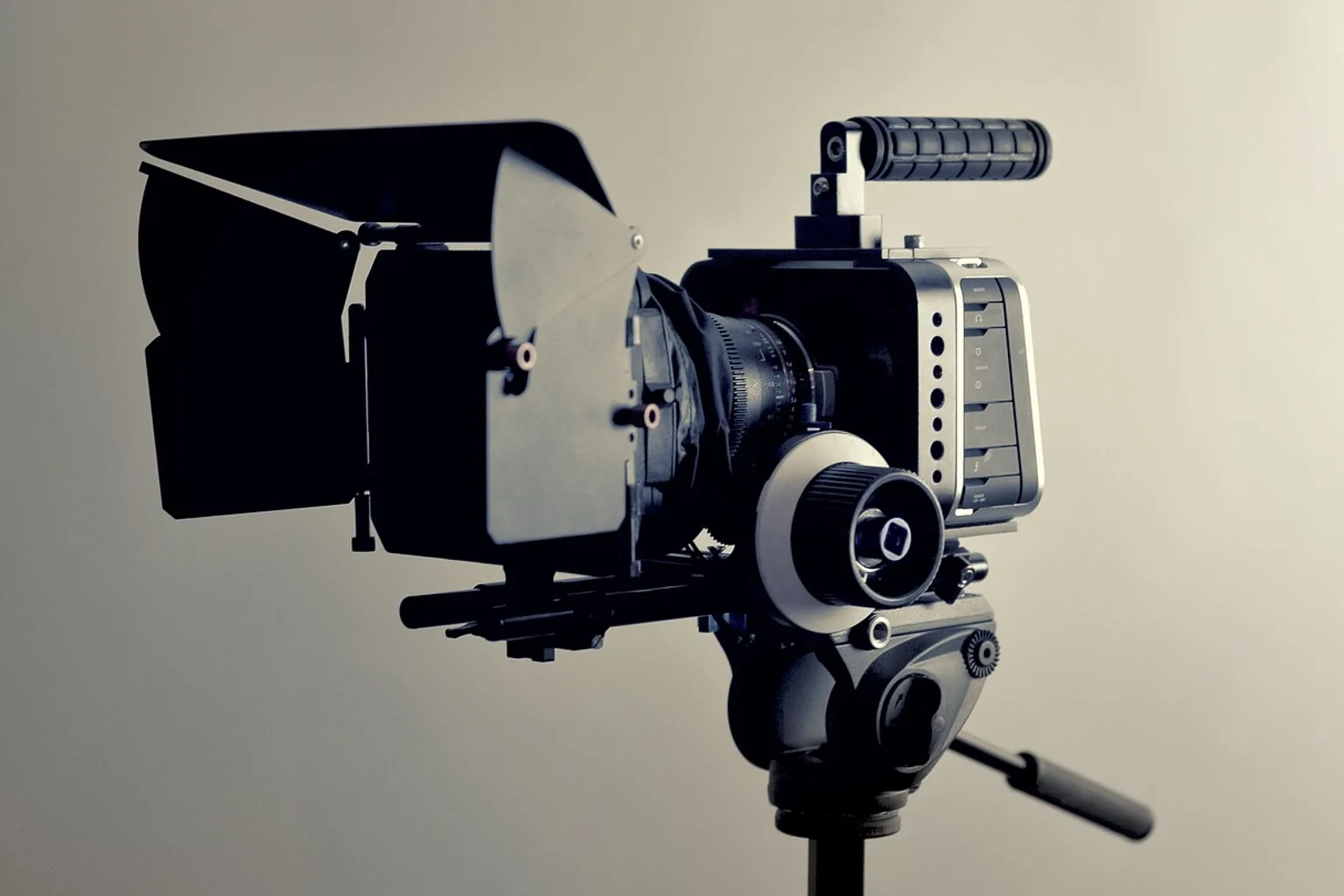
A video promo is a short branded video, usually 15 to 90 seconds, built around one job: drive a specific action from whoever watches it. Not a company story. Not a culture reel. One offer, one hook, one ask. Get that scope right and a promo earns its budget many times over. Get it wrong, and it’s an expensive video nobody finishes watching.
01 The basics
What is a video promo?
A video promo is a short-form marketing video built to move a specific audience toward a specific action in under 90 seconds. It’s the video equivalent of a landing page: narrow scope, one clear call to action, built to convert rather than to entertain in the abstract.
The confusion around the term comes from how loosely it gets used. Agencies call a 15-second Instagram teaser a “promo.” Enterprise studios call a $40,000 flagship launch film a “promo.” Both uses are technically correct, but they point to very different scopes, budgets, and timelines. What actually separates a promo from a brand film or a full commercial isn’t runtime. It’s the job the video is hired to do.
In 2026, 91% of businesses use video as a marketing tool, back to the all-time high the category saw before a brief 2025 dip, and 93% of those marketers call video an important part of their overall strategy (Wyzowl, State of Video Marketing 2026). A promo is usually the first video format a growing company commissions, because it maps directly to a business goal: more sign-ups, more demo requests, more shares.
Video promo vs. brand film vs. commercial
These three get used interchangeably, and that’s where budgets go sideways. A video promo sells one offer or moment, in 15 to 90 seconds, for owned and organic channels. A brand film builds a company’s broader story and reputation, usually 60 to 180 seconds, for the homepage, sales decks, and investor materials. A commercial implies a paid media buy behind it, broadcast-grade production values, and a distribution budget that often costs more than the video itself.
None of these labels are wrong. They’re just different jobs. Ask what the video needs to do before you ask what to call it.
02 Types
What are the 5 main types of video promos?
The five most common video promo types are the product teaser, the launch announcement, the offer or sale promo, the social proof promo, and the recruiting or culture promo. Each targets a different stage of the funnel, and picking the wrong type for your goal is the most common reason a promo underperforms.
According to Wyzowl’s 2026 report, 93% of video marketers say video has helped increase user understanding of their product or service, and 93% say it has helped increase brand awareness (Wyzowl, 2026). That dual effect, understanding plus awareness, is why the promo type matters: a teaser optimized for awareness will underperform if you actually need a conversion-focused offer promo.
- Product teaser: builds anticipation ahead of a launch, no explicit ask beyond a follow or sign-up.
- Launch announcement: the moment a product or feature goes live, paired with a clear “start now” or “get access” ask.
- Offer or sale promo: time-boxed, built around urgency and a specific discount or bundle.
- Social proof promo: built from a customer quote, result, or testimonial, used to close hesitant buyers.
- Recruiting or culture promo: sells the company as a place to work, aimed at candidates rather than customers.
Series B and growth-stage teams tend to under-invest in the launch announcement type specifically, treating it as an afterthought next to the brand film. In practice it’s often the highest-leverage promo in the whole library, because it’s the one asset that gets forwarded internally, dropped into a sales deck, and reused across every channel the week of launch.
03 Cost
How much does a video promo cost in 2026?
A video promo costs $1,500 to $25,000 in 2026, depending on scope. In 2026, Vidico’s pricing survey of over 50 production companies puts the mid-tier “professional agency” range at $5,000 to $15,000, with high-end cinematic work starting around $15,000 (Vidico, Promo Video Pricing Guide 2026). Simple, social-first promos with a single-camera setup and minimal editing run $1,500 to $5,000. Cinematic, AI-hybrid promos with original footage, compositing, and generative post, like Emissary’s own tiers, run $15,000 to $25,000.
Budget isn’t the only variable that moves the number. Crew size, number of locations, revision rounds, and licensed music all add up, and unbudgeted extras commonly add 40% to 70% on top of the initial quote for music licensing, revisions, and platform re-cuts. Ask for that full number upfront, not just the headline production fee.
For a full breakdown of tiers, what’s included at each price point, and how Emissary structures its own pricing, see our companion pricing guide.
04 When to use one
When should you commission a video promo instead of another format?
Commission a video promo when you have one specific action you need an audience to take within a defined window: a launch, an offer, a hiring push, or a proof point you need to move fast. If the goal is broader, ongoing brand-building instead of a single action, a brand film or an AI-hybrid production approach built for a content system is the better fit.
The channel matters as much as the goal. In HubSpot’s 2025 Marketing Trends Report, short-form video was the format marketers most often named as their top-performing use of video and the one most widely produced (HubSpot, Marketing Trends Report). If your promo is landing on TikTok, Reels, or Shorts, that reinforces the case for a promo over a longer-form asset.
Attention data backs the short runtime up further. Average screen-based attention per task has dropped to about 47 seconds (HubSpot, citing attention-span research). A promo has to earn its second look immediately, which is exactly why scope discipline (one ask, one hook) matters more than production polish alone.
05 What makes a promo convert
What makes a video promo actually convert?
A video promo converts when it opens with the offer or hook in the first few seconds, asks for exactly one action, and runs no longer than the attention budget of its platform. In 2026, 85% of people say they’ve been convinced to buy a product or service by watching a video, and 84% of consumers say they want to see more video from brands this year (Wyzowl, State of Video Marketing 2026).
Across the promo-format projects Emissary has scoped for Series B and growth-stage clients, the single most common fix isn’t a bigger budget. It’s cutting the number of asks in a promo from three (follow, click, share) down to one. A promo that tries to do everything usually converts on nothing.
The demand side of this is not the bottleneck. Viewer appetite for brand video is already high, per the Wyzowl figures above. The bottleneck is usually a promo that isn’t scoped tightly enough to earn that conversion.
Key Takeaways
Ready to scope a promo for your next launch or campaign? Browse what Emissary builds for growth-stage teams, or head back to our full insights library for more production playbooks.
Frequently asked questions
What is a video promo, exactly?
A video promo is a short branded video, typically 15 to 90 seconds, built to drive one specific action: a click, a sign-up, a follow, or a purchase. It differs from a brand film in scope. A promo sells a single offer or moment. A brand film builds a company's broader story and reputation over a longer runtime.
How much does a video promo cost in 2026?
Simple social-first promos run $1,500 to $5,000. Mid-tier promos with scripted narrative and a small crew run $5,000 to $15,000. A cinematic, AI-hybrid promo with original footage and compositing, like Emissary's Executive Sizzle tier, runs $15,000 to $25,000. Scope, crew size, and post-production depth drive the range, not runtime alone.
What is the difference between a video promo and a commercial?
The line is mostly about distribution and budget, not craft. A commercial usually implies paid media placement, broadcast-grade production values, and a media buy behind it. A promo is built for owned and organic channels first: your homepage, email, social, and sales decks. Many promos get boosted with paid spend later, but they're not built assuming it.
How long should a video promo be?
Most effective promos run 15 to 60 seconds. Wyzowl's 2026 data shows 71% of marketers believe the 30 second to 2 minute range performs best, and average screen-based attention per task has dropped to about 47 seconds (HubSpot). Front-load the offer or hook, then use the remaining seconds to earn the action you want.
Do I need a full production studio for a video promo, or can I do it in-house?
It depends on where the promo will run. A founder-shot vertical clip for organic social can work in-house. A promo that appears on your homepage, in paid media, or in front of enterprise buyers benefits from professional lighting, sound, and edit, because 96% of people have watched an explainer video to evaluate a product and that same polish signals credibility on a promo.
More from Insights
- B2B Video Production Pricing: What a $40K Flagship Film Includes B2B video production pricing, decoded. A $40K Flagship Launch Film would cost $85K to $250K with a traditional crew or LED volume. Here is the line-by-line.
- Best AI Video Production Agency (2026): An Honest Comparison The best AI video production agency depends on whether you need generation or production. An honest 2026 comparison of 8 companies, with pricing and fit.
- What Goes Into a Cinematic Conference Keynote Opener Film A conference keynote opener film is the cinematic stage film that plays right before your CEO speaks. Here's the anatomy, the timeline, and what it really costs.